
How to structure a dissertation
The chapter-by-chapter structure and golden thread that make a strong conclusion possible.
Not sure where to start? Talk to our support team live.

Dissertations & Study Skills
By the final chapter you are exhausted, and it shows — most weak conclusions simply summarise what came before. This UK guide explains what a PhD conclusion must actually do, why it is hard, and how to synthesise your findings into a clear contribution to knowledge.
The short version
A strong PhD thesis conclusion does more than summarise: it restates your research aim, synthesises your key findings into a single argument, states your original contribution to knowledge, discusses implications, acknowledges limitations honestly and suggests future research. It is your final handshake with the examiner — the lasting impression that turns a set of chapters into one coherent contribution.
On this page
The basics
Writing the conclusion to a PhD thesis is deceptively hard: you reach it exhausted, having already said everything once, and the temptation is simply to recap. If you want structured guidance on planning and strengthening the final chapters, our thesis support can help you understand what to prioritise — while the research and the writing stay entirely your own. The conclusion is not a recap; it is where your thesis finally becomes one contribution rather than a collection of chapters.
A doctoral conclusion has a specific job: it returns to the research aim you set in Chapter 1, draws your findings together into a single, defensible argument, and states clearly what your work adds to the field. It is the last thing your examiner reads before the viva, so it carries disproportionate weight — it is your final handshake and the impression you leave behind. For the exact required structure, always follow your own institution’s thesis regulations and your supervisor’s guidance.
The honest answer
Even confident researchers stall on the final chapter, and the reasons are consistent:
Reassurance Every one of these is solvable with a plan. Decide what your single contribution is, synthesise the findings that support it, and frame limitations as scope decisions — and the chapter writes far more easily.
The anatomy
| Element | Its job | Common pitfall |
|---|---|---|
| Restate the aim | Remind the reader what you set out to do | Copying the introduction word for word |
| Synthesise findings | Draw the chapters into one argument | Listing results chapter by chapter |
| Contribution to knowledge | State clearly what is new | Being vague or failing to claim it |
| Implications | Show why it matters (theory/practice/policy) | Overstating real-world impact |
| Limitations | Frame the boundaries honestly | Hiding them, or over-apologising |
| Future research | Point to what comes next | A generic “more research is needed” |
| Concluding statement | End on your contribution | Introducing brand-new material |
A study aid only — always follow your institution’s thesis regulations and your supervisor’s guidance for the definitive required structure.
The core technique
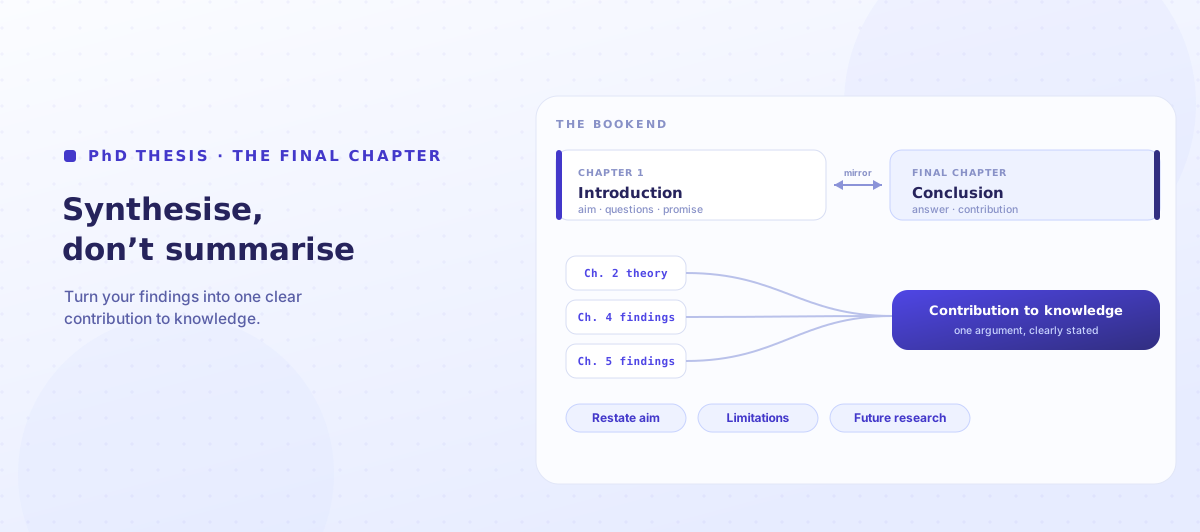
The most reliable way to make a thesis feel cohesive is the bookend: your conclusion mirrors the aim, questions and promises you made in Chapter 1. Where the introduction asked the question, the conclusion answers it; where the introduction promised a contribution, the conclusion delivers it. Re-reading your introduction before you draft the conclusion is the single most useful thing you can do.
This is also where good structure across the whole thesis pays off. If your overall structure keeps a clear golden thread from research question to findings, the conclusion almost writes itself — you are simply closing the loop the rest of the thesis has already drawn.
Summary vs synthesis
The difference between a pass-level and a distinction-level conclusion is usually synthesis. Summary restates each chapter in isolation; synthesis connects them into a single insight that is larger than any one chapter.
Here is a short, generic teaching example of the shift:
Notice how the second version does not add new data; it relates existing findings to build the argument. A simple test: if a sentence could have appeared in your findings chapters unchanged, it is summary, not synthesis. This example is deliberately generic — keep your own thesis entirely your own work.
The delicate part
Acknowledging limitations is a mark of rigour, not weakness — examiners expect it. The skill is to frame limitations as scope decisions rather than failures, and to pair each with what it enabled. For example: “While time constraints limited the sample size, the focused approach allowed a deeper analysis of the core variables.” That is honest and confident at once.
Then turn limitations forward: each one is a natural springboard for your future research suggestions, which should be specific to your findings rather than a generic call for “more research”. Done well, limitations and future work show the examiner you understand exactly where your contribution sits — and where the field goes next.
Acting on feedback
Your supervisor’s comments on a conclusion draft are gold, but they are often terse — “too descriptive”, “where’s the contribution?”, “over-claimed”. The value is only unlocked if you translate each comment into a concrete change. If a piece of feedback is unclear, our Feedback Decoder helps you turn a supervisor or examiner comment into a specific next step.
Work through feedback deliberately: group the comments (structure, claims, clarity), fix the recurring issues first, and re-read the conclusion against your introduction one more time. If UK-style feedback conventions are unfamiliar, our guide to understanding UK feedback helps you read them. The revisions and the argument remain entirely yours.
Act on your feedback
Feedback Decoder turns terse supervisor or examiner comments — “too descriptive”, “where’s the contribution?”, “over-claimed” — into clear, specific changes you can make to your next draft. You make the changes; every word stays your own.
Pitfalls
Most weak conclusions share the same avoidable faults:
Before you submit
Use this on your own draft — always defer to your institution’s thesis regulations and your supervisor’s guidance.
Why us
My Perfect Writing helps PhD students review their own final chapters and make sense of supervisor feedback — while they stay responsible for their own research, argument and thesis. We do not write theses or conclusions for you.
Marker’s Eye reviews your own draft against academic expectations for synthesis, clarity and structure — you make the changes.
Feedback Decoder turns terse comments like “too descriptive” into concrete, specific actions for your next revision.
The free checklist helps you plan a conclusion that synthesises findings and states your contribution before you draft.
Guidance reflects how UK doctoral study, supervision and examination work, including the viva.
The research, argument and writing remain yours. We do not write theses or conclusions for you.
You stay responsible for your own thesis — our tools help you review and refine it, they do not write it for you.
Questions
Before you submit
Use this guide and the free checklist to plan a conclusion that synthesises rather than summarises, then let Feedback Decoder turn your supervisor’s comments into concrete revisions before you submit.
Guidance should support your learning, not replace your own work.