
Choosing your topic
The upstream step: how to select and scope a viable criminology dissertation topic and research question.
Not sure where to start? Talk to our support team live.

Criminology
You have your topic and your method — now the chapters have to hold together. This guide shows what each chapter of a criminology dissertation must do, how to weight the word count, and how an empirical structure differs from a library-based one.
The short version
A criminology dissertation usually follows six chapters — introduction, literature review, methodology, findings, discussion and conclusion — with the literature review, findings and discussion carrying most of the word count. The exact shape depends on whether your study is empirical (collecting or analysing data) or library-based (a structured argument built from existing sources).
On this page
Start here
Most dissertation-structure advice is written for no subject in particular. A criminology dissertation has its own pressures: your evidence is often sensitive (crime, harm, vulnerable people), your data is frequently secondary rather than collected first-hand, and your argument has to connect criminological theory to real patterns of offending, victimisation or justice. Getting the structure right means each chapter carries the weight it should — not an even six-way split. If the write-up for a criminology or criminal-justice module feels overwhelming, My Perfect Writing’s criminal justice assignment help can show you what a strong chapter looks like in your field, so you can plan and write your own.
This guide assumes you already have a topic and a research question. If you are still at that stage, start with choosing a criminology dissertation topic first, then come back to build the structure around it.
Integrity first A structure is a plan for work you will genuinely do. Map the chapters, weight them, and fill them with your own research and analysis — the argument has to be yours.
At a glance
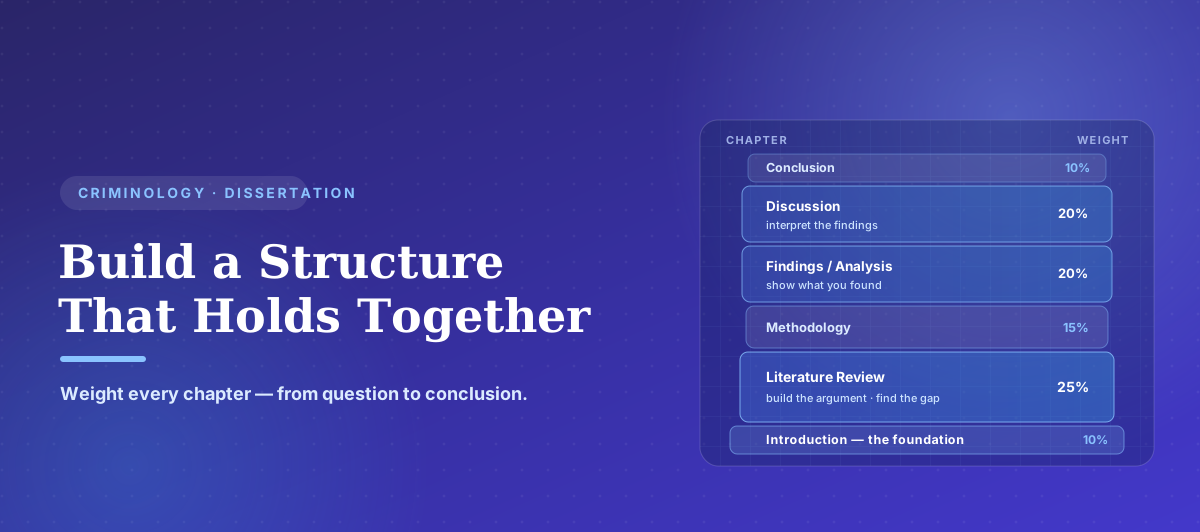
| Chapter | What it does | Rough weight |
|---|---|---|
| 1. Introduction | Sets up the problem, aim and research question, and why it matters | ~10% |
| 2. Literature review | Builds an argument from existing research and finds the gap you address | ~25% |
| 3. Methodology | Explains and justifies how you answered the question (design, data, ethics) | ~15% |
| 4. Findings / analysis | Presents what you found, organised around your question or themes | ~20% |
| 5. Discussion | Interprets the findings against the literature and theory | ~20% |
| 6. Conclusion | Answers the question, states contribution, limitations and next steps | ~10% |
A starting point, not a rule — always follow your own dissertation handbook, which sets the definitive word count and chapter requirements.
The first decision
Before you weight the chapters, decide which kind of dissertation you are writing, because it changes the structure:
Neither is the "easy" option — a library-based dissertation still needs a real method and a clear analytical argument, not just a summary of what others have said. Choosing consciously, and structuring to match, is what markers reward.
Chapter 1
Your introduction has one job: to make the reader understand the problem and want the answer. Move quickly from the broad area (say, youth knife crime, or police use of stop and search) to a specific, answerable research question. State your aim, briefly signal your approach, and explain why the question matters — academically and in the real world.
Keep it tight. A common mistake is a sprawling introduction that reviews the literature or explains the method; those belong in later chapters. End with a short "structure of this dissertation" paragraph so the reader knows the route ahead.
Chapter 2
The literature review is usually your largest chapter, and it is not a list. It is an argument that organises existing research into themes or debates, shows where scholars agree and disagree, and — crucially — identifies the gap your dissertation fills. That gap is what justifies your whole project, so it should point straight at your research question.
Because your method has to answer the gap you identify here, the two chapters need to line up. If your review is doing its job, revisit how to construct a critical literature review to keep it analytical rather than descriptive — the same "explain, don't just report" discipline that markers reward across the dissertation.
Chapter 3
The methodology chapter explains how you answered your question and why that was the right way. In criminology, two things carry extra weight. First, secondary data is often the smart choice: large, reliable datasets already exist — such as the Crime Survey for England and Wales and Office for National Statistics crime data — and using them avoids the access hurdles of researching offenders or victims directly. Second, ethics is central, not a box to tick; set your approach against a recognised framework such as the British Society of Criminology’s statement of ethics.
This chapter is a topic in its own right; for the detail of matching method to question, sampling, access and ethics, see our guide to writing a criminology dissertation methodology. Structurally, the point is simply that it sits between your literature review and your findings, and justifies everything that follows.
Chapters 4–5
Keep findings and discussion doing different jobs. Findings present what you found — organised around your research question or your themes, using tables or figures where they help — without yet interpreting it. The discussion then does the interpreting: what the findings mean, how they fit (or challenge) the literature and criminological theory, and what the surprises or tensions are.
In a library-based dissertation these often merge into thematic chapters that present and analyse the scholarship together — but even then, keep the line clear in each paragraph between reporting a source and making your own analytical point. Blurring "what I found" with "what it means" is one of the most common ways criminology dissertations lose analytical marks.
Chapter 6
Your conclusion answers the research question directly, states your contribution, is honest about limitations, and suggests where research could go next. It introduces no new evidence — it lands the argument the earlier chapters built.
Across the whole dissertation, markers reward analysis over description and coherence over coverage: a literature review that argues, a methodology that justifies, and a discussion that interprets. It helps to see the chapter map in the wider context of any UK dissertation — our guide to structuring a dissertation shows the general pattern this criminology version specialises. And if you want a structured second read of a chapter before submission, My Perfect Writing’s thesis and dissertation help focuses on the areas UK markers assess.
Free resource
Not sure how much weight each chapter should carry? Our Criminology Dissertation Structure Blueprint lays out the full chapter map, a word-count weighting guide, an empirical-versus-library-based branch, and what each chapter has to prove to a marker — so you can plan the whole shape before you commit words to it.
Grab the blueprint Use the free resource card on this page to get the Criminology Dissertation Structure Blueprint sent to you — keep it beside your proposal as you plan.
Before you start writing
Run this against your own outline before you draft a single chapter.
Questions