
Apply Gibbs’ cycle
Use the six stages without losing analytical depth.
Not sure where to start? Talk to our support team live.

Reflective Models
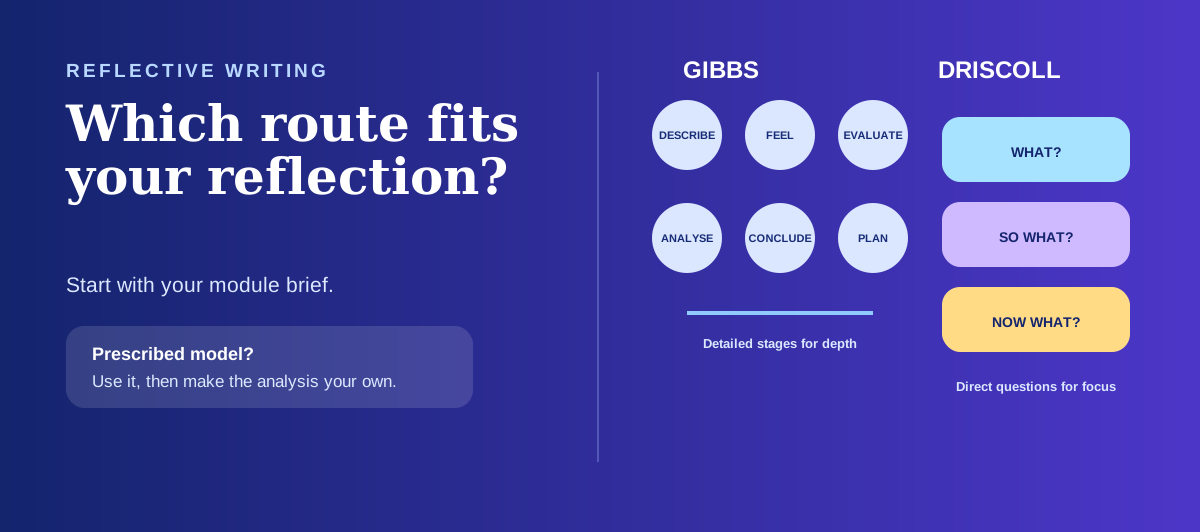
Gibbs gives a detailed six-stage route; Driscoll gives three direct questions. The right choice is the one your brief, setting and word count actually support.
The short version
Gibbs is usually more useful when a brief requires a detailed reflective essay because its six stages separate description, feelings, evaluation, analysis, conclusion and action. Driscoll is often better for a concise reflection on one event because it uses three questions: What? So what? Now what? Follow the model specified by your module first.
On this page
Start with the brief
The first answer is often simple: if your module names Gibbs or Driscoll, use it. A reflective model is a scaffold, not a substitute for the assessment criteria. Check whether the task needs a long critical reflection, a short practice-based account, theory, confidentiality or a specific action plan. For support interpreting a health or placement brief, My Perfect Writing’s nursing assignment help focuses on ethical learning support while your experience and writing stay your own.
Read our separate guides to applying Gibbs’ Reflective Cycle and the Driscoll model for fuller stage guidance.
At a glance
| Question | Gibbs | Driscoll |
|---|---|---|
| How many stages? | Six: Description, Feelings, Evaluation, Analysis, Conclusion, Action Plan | Three: What? So what? Now what? |
| Best fit | Longer, detailed reflections where analysis needs its own space | Shorter, focused reflections on one event or learning moment |
| Main risk | Treating six headings as a checklist without analysis | Answering the three questions too briefly or descriptively |
Neither is universally “better”. Your brief, practice context and marking criteria decide.
When Gibbs fits
Gibbs can be useful where a reflection needs to distinguish what happened from how you felt, what went well or poorly, why it mattered and what you will do differently. The key marks are normally won in evaluation and analysis, not by making the description longer. The University of Edinburgh’s Gibbs overview is a clear independent explanation of the cycle.
Review your reflection
Marker’s Eye can help you review your own reflective draft for structure, analysis and evidence against UK marking expectations. It does not choose a model or write the reflection for you.
When Driscoll fits
Driscoll’s What? So what? Now what? structure can work well when you need a compact account of one event and a realistic next step. “What?” establishes only the necessary context. “So what?” is where you explain significance using experience, feedback or evidence. “Now what?” converts learning into a specific action. The University of Edinburgh’s Driscoll guide explains the three questions in more detail.
Make the decision
If in doubt, ask the module tutor which framework they expect.
Why us
My Perfect Writing helps you understand what the brief asks, structure your own reflection and review a draft you have written. We do not invent placement experiences, write assessed reflections or replace tutor feedback.
Guidance helps you identify whether the task already prescribes Gibbs, Driscoll or another framework.
Prompts and Marker’s Eye review help you spot where your own draft recounts events but does not yet explain their significance.
You are encouraged to connect relevant theory or feedback to your own experience rather than add citations mechanically.
Planning support helps you make the Now-What stage specific, realistic and connected to what you learned.
Your experience, judgement, confidentiality decisions and final wording remain entirely your responsibility.
Use feedback to develop your own reflection, never to replace your voice or experience.
Questions
Before submission
Use your brief to select the model and your rubric to check the draft. Marker’s Eye supports review of your own work; you remain the author.
Reflective writing must remain grounded in your own experience and judgement.