
Description vs analysis
Turn factual summary into the critical analysis that synthesis and strong source use depend on.
Not sure where to start? Talk to our support team live.

Referencing
It is a common belief that more references mean a better mark. This UK guide explains why source quality, relevance and synthesis matter more than quantity, how to avoid citation dumping, and how to check that every source you cite genuinely supports your argument — with a before-and-after example.
The short version
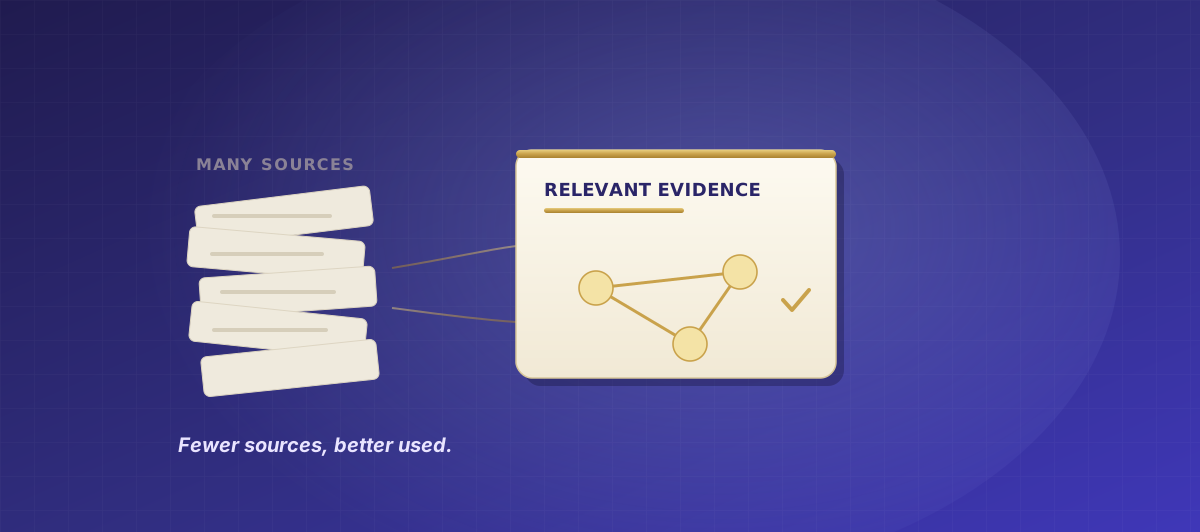
Adding more sources does not automatically improve an assignment. Markers reward how well you use evidence, not how many references you list. One relevant, authoritative source used to support and develop a specific claim is worth more than several weak ones dropped in. Aim for relevance, quality and synthesis — not quantity.
On this page
The myth
Many students assume that a longer reference list signals more research and earns more marks. It usually does not. UK marking criteria reward the quality of your argument and how well evidence supports it — not the number of citations. A page crowded with references can even lower your mark if it reads as padding rather than analysis.
What markers look for is whether each source is relevant, authoritative, and actually used to develop a point. Ten sources listed without explanation are weaker than three explained, compared and applied to your question. This is general study guidance; your module’s criteria and referencing style always come first.
What counts
Two things decide whether a source helps. Relevance: does it directly support the specific claim you are making, or is it just loosely on-topic? Quality and authority: is it a credible, peer-reviewed or otherwise authoritative source, and is it current enough for your field? A single strong, relevant source used well beats a handful of weak or tangential ones.
Balance your evidence too. Primary sources (original studies, data, cases, texts) carry the most weight for a claim; secondary sources (reviews, commentary) help you frame and interpret them. Lead with primary evidence for your key claims and use secondary sources to situate and analyse it, rather than relying on summaries of summaries.
See the difference
| Citation dumping | Using evidence well |
|---|---|
| Lists many sources in a row | Chooses the few that fit the claim |
| Cites without explaining relevance | Explains what each source shows |
| Treats all sources as equal | Weighs authority and quality |
| Sources sit side by side | Sources are compared and connected |
| Reference list is the goal | The argument is the goal |
A study aid only — the right amount of evidence depends on your task and marking criteria.
The key skill
Synthesis means bringing sources into conversation: showing where they agree, disagree, build on or qualify each other, and what that means for your argument. It is the difference between reporting what each author said and using them together to make a point — the same move as turning description into critical analysis.
A short before-and-after.
The second version uses fewer words per source yet says far more, because the sources are connected and evaluated. The University of Manchester’s Academic Phrasebank: Referring to Sources lists phrases for comparing and synthesising evidence. This example is illustrative only — the writing in your own work must be your own.
Choose well
For a specific claim, a single authoritative source that directly proves the point is more persuasive than several weak sources that only gesture at it. Adding weak sources to “back up” a claim can actually undermine it, because a marker sees padding and questions your judgement. The test is not “how many can I cite?” but “what is the best available evidence for this exact point?”.
Before you write, it helps to know precisely what the question needs, so you gather the right evidence rather than the most evidence — our Brief Decoder can help you read the brief closely first.
Avoid these
These are the patterns that lose marks:
Apply it to your own work
Marker’s Eye reviews your own draft against UK marking expectations — flagging where you list rather than synthesise, and where a citation adds nothing — so you can tighten it. You make the changes; every word stays your own.
Before you submit
Use this on your own draft — your marking criteria decide how much evidence a task needs.
Why us
My Perfect Writing helps you understand your task and review your own use of evidence — while you stay responsible for your own research and words. We do not write your work.
Brief Decoder helps you read the brief so you gather the right evidence, not just the most.
Marker’s Eye reviews your own writing and flags citation dumping or thin use of sources against UK marking expectations.
Guidance reflects how UK markers weigh relevance, authority and synthesis over quantity.
The research, analysis and writing remain yours. We do not write assessments.
Use the free sorter to decide which sources earn their place before deciding whether you need more help.
You stay responsible for your own work — our tools help you plan and review it, they do not do it for you.
Questions
Before you submit
Use this guide to choose relevant sources and synthesise them, then let Marker’s Eye review your own draft against UK marking expectations before you submit.
Guidance should support your learning, not replace your own work.