
Understanding UK tutor feedback
What common UK feedback phrases like “too descriptive” and “develop this” mean — and how to act on them.
Not sure where to start? Talk to our support team live.

Critical Analysis
“Too descriptive” is one of the most common comments on UK student work. This guide explains the difference between description and analysis, why markers reward analysis, and how to turn a factual summary into critical argument that answers the question — with a clear before-and-after example.
The short version
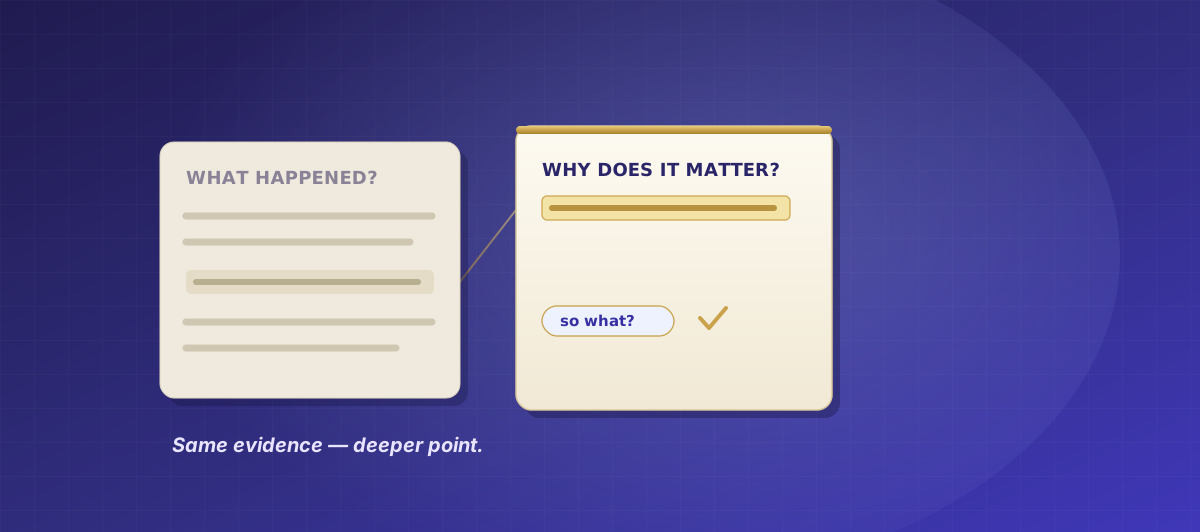
Description tells the reader what happened or what a source says; analysis explains why it matters — interpreting evidence, weighing significance, comparing views and building toward your argument. When UK markers write “too descriptive”, they want less summary and more judgement: showing how each point answers the question, not just reporting information.
On this page
The core difference
Description reports information: what happened, what a source says, what a theory states. It answers what, who, when and where. Analysis does something harder: it interprets that information and explains why it matters, how parts relate, and so what it means for the question you are answering. Description is necessary raw material; analysis is what you build with it.
Most UK marking criteria reward analysis far more heavily than description, especially at degree level. A common pattern in lower-scoring work is that it explains sources accurately but never uses them to make a point. This guide is general study-skills guidance; your module’s criteria and your tutor’s guidance always come first.
See it in action
| Description (what) | Analysis (why / so what) |
|---|---|
| States what a source says | Explains what it means for your argument |
| Lists facts or events in order | Shows how they connect or cause each other |
| Summarises two viewpoints | Weighs them and judges which is stronger |
| Reports a statistic | Interprets what the statistic implies, and its limits |
| Defines a concept | Applies the concept to your specific question |
A study aid only — the balance you need depends on your task and marking criteria.
Decode the feedback
Comments like “too descriptive”, “not critical enough”, “develop this” or a blunt “so what?” all point at the same gap: you have shown you understand the material, but you have not used it to answer the question. Markers are trained to reward critical analysis — judgement supported by evidence — so description alone caps your marks however accurate it is.
If you are getting these comments and are not sure what they mean, our guide to understanding UK tutor feedback translates the most common phrases into concrete actions. The fix is almost always the same: add the missing step where you say what the information means.
The method
Analysis is a habit you can build with a few repeatable moves. After each descriptive sentence, add a sentence that does one of these: ask “so what?” and answer it; link the point back to the question; compare it with something else; or evaluate its significance, strengths or limits. Understanding exactly what the question asks makes this far easier — our Brief Decoder can help you pin that down first.
A short before-and-after. Take a descriptive sentence and upgrade it:
The analytical version keeps the fact but adds interpretation, relevance and a limit. That extra step is where the marks are. For more academic phrasing that signals critical analysis, the University of Manchester’s Academic Phrasebank: Being Critical is a reliable, free reference. This is an illustrative sentence only — the analysis in your own work must be your own.
Useful language
| Analytical move | Sentence starter |
|---|---|
| Show significance | This matters because… / The implication is… |
| Evaluate | A strength of this is… / However, a limitation is… |
| Compare or contrast | In contrast… / Similarly… / Unlike… |
| Show cause or effect | As a result… / This helps explain why… |
| Link to the question | This suggests that, in answer to the question,… |
Phrases are prompts, not a script — use them to signal analysis, then say something of your own.
Keep the balance
Yes — description is not the enemy. You need it to set context, define key terms, explain a method, or summarise a source before you analyse it. The problem is never that description exists; it is when description replaces analysis or takes up most of the word count. A useful habit is to keep descriptive setup short and make sure every descriptive passage is quickly followed by the point it supports.
A rough guide many students find helpful: describe just enough for the reader to follow, then spend the majority of each paragraph on analysis. Your subject and task will shift that balance, so always check your own marking criteria.
Avoid these
These are the patterns markers see most often:
Apply it to your own work
Marker’s Eye reviews your own draft against UK marking expectations — flagging where you summarise instead of analyse, and where a point needs evidence or a “so what?” — so you can fix it. You make the changes; every word stays your own.
Before you submit
Use this on your own draft — your marking criteria define exactly what “analysis” means for your task.
Why us
My Perfect Writing helps you understand your task and review your own writing — while you stay responsible for your own analysis and words. We do not write your work.
Brief Decoder helps you read the assignment brief so your analysis answers what is actually being asked.
Marker’s Eye reviews your own writing and flags where description should become analysis, against UK marking expectations.
Guidance reflects how UK markers weigh description against critical analysis and argument.
The analysis and writing remain yours. We do not write assessments.
Use the free converter to upgrade your own paragraphs before deciding whether you need any further guidance.
You stay responsible for your own analysis — our tools help you plan and review it, they do not do it for you.
Questions
Before you submit
Use this guide to turn description into analysis, then let Marker’s Eye review your own draft against UK marking expectations before you submit.
Guidance should support your learning, not replace your own work.