
Core Equity & Trusts principles
Build the doctrinal knowledge behind problem questions.
Not sure where to start? Talk to our support team live.

Equity & Trusts
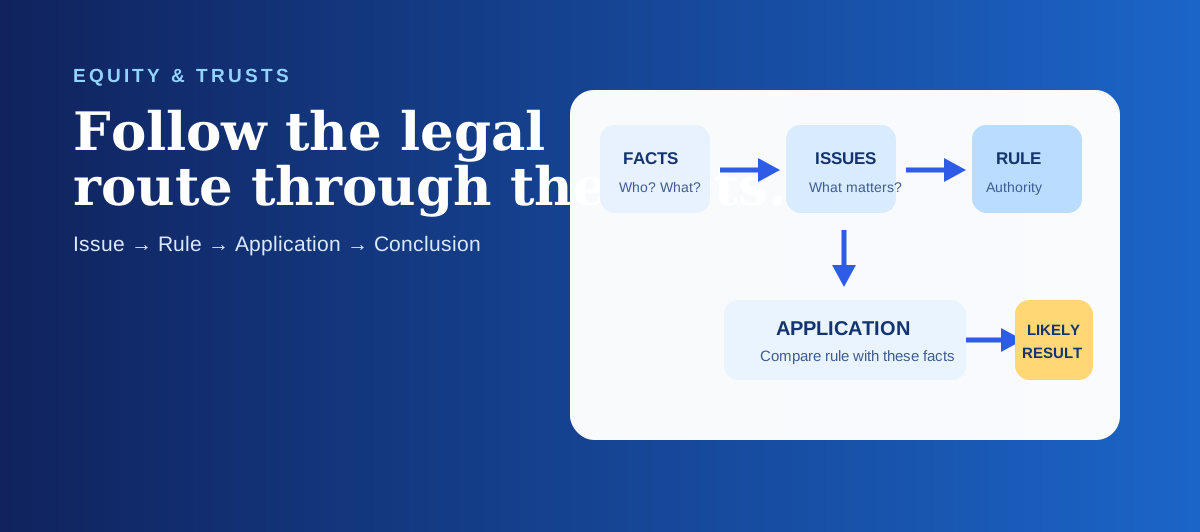
Equity and Trusts problem questions reward a disciplined route through the facts: identify each issue, state the applicable law, apply it precisely and reach a reasoned conclusion.
The short version
To answer an Equity and Trusts problem question, first map the parties and legally relevant facts. Then organise the answer issue by issue: identify the rule and authority, apply it to the facts, consider any competing argument and state the likely consequence or remedy. Do not write a general essay on the topic; keep returning to what each party can argue.
On this page
Read facts actively
Equity and Trusts problem questions are designed to test how you reason from facts to legal consequences. Before researching, annotate who did what, what property or obligation is involved, and which facts may trigger formalities, certainty, fiduciary duties, breach or remedies. If you need support understanding how to approach a UK law brief, My Perfect Writing’s law assignment help provides ethical study guidance while you remain the author.
Build substantive knowledge alongside technique: see our guides to Equity and Trusts principles and secret trusts.
Use a repeatable route
| Stage | What to do | Question to ask |
|---|---|---|
| Issue | Name the specific legal question raised by the facts. | What must be decided for this party? |
| Rule | State the relevant statute, principle and leading authority accurately. | What legal test applies? |
| Application | Compare the facts to the test and argue both sides where genuine uncertainty exists. | Why do these facts meet or fail the test? |
| Conclusion | Give a qualified likely outcome and move to the next issue. | What can this party realistically claim or defend? |
Use headings where your school permits them; they make multi-issue reasoning easier to follow.
Plan the legal route
Brief Decoder can help you break down the task, parties and command words in your own problem question before you research. It does not provide an answer or replace legal judgement.
Apply, do not narrate
After every rule, use the particular facts. Rather than saying “the three certainties are required”, identify which words, property or beneficiaries create a possible failure and explain the argument. Where the result is uncertain, acknowledge the competing reading and explain which is stronger. This is what separates legal application from a descriptive case note.
Keep separate issues separate. A question involving a will, informal communication and a beneficiary may raise more than one doctrine; a clear issue map prevents you from reaching for the first familiar case and missing the next legal step.
Before you submit
Your lecturer’s preferred structure and current module materials take priority.
Why us
My Perfect Writing helps you understand a legal brief, organise your own research and improve legal-writing process. We do not produce submission-ready answers, tell you what conclusion to reach or replace independent legal analysis.
Brief Decoder helps you identify parties, tasks and command words before you start researching.
Planning guidance keeps issue spotting, rule, application and conclusion visible in every section of your own answer.
You are directed to check legislation and case law in appropriate, current sources instead of relying on unverified summaries.
The focus stays on comparing legal tests with the given facts, not on copying case descriptions.
You select authorities, weigh competing arguments and write the final legal analysis in your own words.
Use structured guidance to improve your legal reasoning, while keeping each argument and conclusion yours.
Questions
Before you draft
Use your module materials and current authorities to test every conclusion. Brief Decoder supports planning; you remain responsible for analysis and writing.
Legal analysis and final wording must remain your own.