

What is a Narrative Essay? (And What It Isn't)
A narrative essay tells a story from your perspective. It is usually written in the First Person ("I").
It IS:
- A Story with a Purpose: It must have a central point or "thesis." You aren't just telling us what happened; you are telling us why it matters.
- Vivid and Sensory: It uses sights, sounds, and smells to immerse the reader.
- Structured: It follows a chronological (or non-linear) timeline.
It is NOT:
- A Short Story: A short story is fiction. A narrative essay is non-fiction (based on real life).
- A Rant: It isn't a place to vent without reflection. It requires maturity and insight.
The 5 Essential Elements of a Narrative Essay
To write a compelling narrative, you need more than just a memory. You need the building blocks of storytelling.
1. The Plot (The Sequence of Events)
A plot is not just "one thing after another." It is a chain of cause and effect.
- The Hook: Start in the middle of the action (In Media Res). "The car spun out of control..." is better than "I woke up at 7 AM."
- The Conflict: Without conflict, there is no story. What stood in your way? Was it an external enemy or an internal fear?
2. The Setting (The World)
Transport your reader. Don't say "It was a hot day." Say "The pavement shimmered in the heat, and the air smelled of melting tar."
- Tip: Use the 5 Senses (Sight, Sound, Smell, Taste, Touch).
3. The Characters (The People)
Even in a personal essay, the people around you are characters. Give them depth.
- Dialogue: Let them speak. Dialogue breaks up the text and shows personality.
- Description: Don't just describe their looks; describe their actions. "He drummed his fingers nervously" is better than "He was nervous."
4. The Point of View (The Voice)
You are the narrator. Be consistent. If you are writing about your childhood, try to capture the wonder (or fear) you felt back then, but analyze it with your adult wisdom.
5. The Theme (The "So What?")
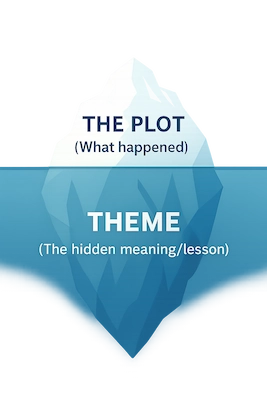
This is the most critical part for academic grading. What did you learn? Did this experience change your worldview? Did it teach you resilience? The theme turns a story into an essay.
"Show, Don't Tell": The Golden Rule
This is the mantra of creative writing.
- Telling: "I was terrified."
- Showing: "My hands shook so hard I dropped my keys. My heart hammered against my ribs like a trapped bird."
Showing allows the reader to experience the emotion rather than just being informed about it. It creates empathy. If you are struggling to convert your "telling" sentences into "showing" scenes, our online essay writing help service can review your draft and suggest specific sensory enhancements.
Structuring Your Narrative Essay
Unlike a standard 5-paragraph essay, a narrative essay flows more organically. However, it still needs a beginning, middle, and end.
The Introduction
- The Hook: Grab the reader.
- Set the Scene: Introduce the setting and characters.
- The Thesis: Hint at the theme. "That was the day I learned that silence is louder than words."
The Body Paragraphs (The Scenes)
Organize your body by scenes, not just arguments.
- Scene 1: The buildup to the conflict.
- Scene 2: The climax (the turning point).
- Scene 3: The immediate aftermath.
Ensure you use transition words to mark the passage of time (e.g., "Moments later," "Eventually," "In retrospect").
The Conclusion
This is where you reflect.
- The Reflection: Look back at the event. How did it change you?
- The Universal Truth: Connect your specific story to a wider human experience (e.g., growing up, loss, love).
Purdue OWL – Narrative Essays – The academic standard for essay structures.
How My Perfect Writing Brings Your Story to Life
Writing about yourself is hard. It requires vulnerability and perspective. Sometimes, you are too close to the memory to see the story. Here is how My Perfect Writing helps.
Expert Storytellers & Academic Writers
We don't just hire academics; we hire creative writers. Our team understands narrative arcs, pacing, and character development. Whether you need a reflective nursing essay or a creative writing piece for English Lit, we match you with a writer who has the right "voice."
Urgent Essay Writing Help
Did you forget the deadline? Or did "writer's block" steal your week? We specialize in urgent essay writing help. We can turn a rough outline into a polished, moving narrative in as little as 24 hours, ensuring you submit on time without compromising on quality.
Authentic & Original
Your story must be yours. We guarantee 100% human-written content. We use plagiarism-free essay writing help uk standards, providing a Turnitin report with every order. We don't recycle stories; we craft unique narratives based on your prompts.
Pay 25% Upfront: Risk-Free Creativity
Creative writing is subjective. You might worry that a writer won't capture your style.
Get premium narrative support by paying just 25% upfront.
You review the draft. Does it sound like you? Is the emotional arc right? Only when you are happy with the story do you pay the balance.
24/7 Support
Inspiration strikes at odd hours. Our support team is available 24/7 to take your order, update your writer with new details, or help you brainstorm ideas for your plot.
Conclusion
Writing a narrative essay is a unique challenge. It asks you to be both an artist and an analyst. You must paint a vivid picture of your life while also stepping back to explain what it all means. When done well, a narrative essay is the most powerful form of academic writing because it connects with the reader on a human level.
Don't be afraid to be vulnerable. Don't be afraid to use your own voice. By mastering the elements of plot, setting, and theme, you can turn a simple memory into a piece of literature.
However, if you are struggling to find the "So What?" in your story or can't seem to make your words flow, you don't have to do it alone.
My Perfect Writing offers the creative mentorship and structural support you need to tell your story your way. With our qualified writers and risk-free payment options, you can submit a narrative that is both personal and professional.
Tell your story, make it matter.
Get Expert Narrative Essay Help Now
Frequently Asked Questions
Can I invent details in a narrative essay?
In a strictly "non-fiction" narrative essay, you should stick to the truth. However, memory is imperfect. You can recreate dialogue that captures the essence of what was said, even if it's not word-for-word. You can also compress timelines (e.g., making a week-long event happen in three days) for the sake of pacing, as long as the core truth remains.
Is it okay to use "I"?
Yes! A narrative essay is almost always written in the first person. It is your story. Using "I" allows you to share your internal thoughts and feelings, which is essential for building a connection with the reader.
How do I choose a topic?
Choose a moment that changed you. It doesn't have to be a huge tragedy or a lottery win. Small moments often make the best essays. Examples: Learning to ride a bike, a specific conversation with a grandparent, or the first time you failed at something. If you can't think of a topic, ask: "When did I grow up?"
What is the difference between a Narrative Essay and a Descriptive Essay?
A descriptive essay focuses on painting a picture of a person, place, or thing (e.g., "Describe your childhood home"). A narrative essay focuses on a sequence of events (e.g., "The day I left my childhood home"). A narrative has a plot and movement; a description is like a photograph.
Can My Perfect Writing help if I just have rough notes?
Absolutely. Many students send us a stream-of-consciousness draft or a list of bullet points about what happened. Our professional writers then take those raw ingredients and "cook" them into a structured, engaging narrative with a clear theme and strong sensory details.
Meet Our Professional Essay Writers
Empowering Your Academic Writing Journey with Authority, Expertise, and Experience

Dr. Emma Wilson
PhD in Literature

Prof. James Chen
MSc in Computer Science

Dr. Sarah Ahmed
PhD in Law & Ethics
Ready to Work With Our Expert Writers?